Urban@UW Presenting at New York Climate Week
Urban@UW Director Rachel Berney and Program Manager Kate Landis will present on the Research-to Action Collaboratory later this month at New York Climate Week, as part of the New York Climate Exchange. “We are thrilled to be one of the very few university centers invited to participate in New York Climate Week. This well- publicized event gives us the opportunity to share the Research-to-Action Collaboratory, a high-impact catalyst for change, with an international audience of scientists, elected leaders, activists, and green entrepreneurs,” said Berney.
The Research-to-Action Collaboratory transforms university-public partnerships by providing coaching, skill sharing, and seed funding to projects co-led by University of Washington faculty and students plus community leaders. These project tackle complex urban challenges like a lack of affordable housing, extreme heat, and stormwater flooding. The Research-to-Action Collaboratory provides a supportive framework so that UW scholars from multiple disciplines can effectively work with embedded public leaders to find real-world solutions.
Rachel Berney and Kate Landis will present their workshop, “Call Me Maybe? University-Community Partnerships for a Greener Tomorrow” on Monday, September 23rd from 5-7PM. The talk is free and open to the public, but registration is required.
Urban@UW Director Rachel Berney and Program Manager Kate Landis will present on the Research-to Action Collaboratory later this month at New York Climate Week, as part of the New York Climate Exchange.
Exciting Updates from RAC Cohort 2
Published on February 11, 2025
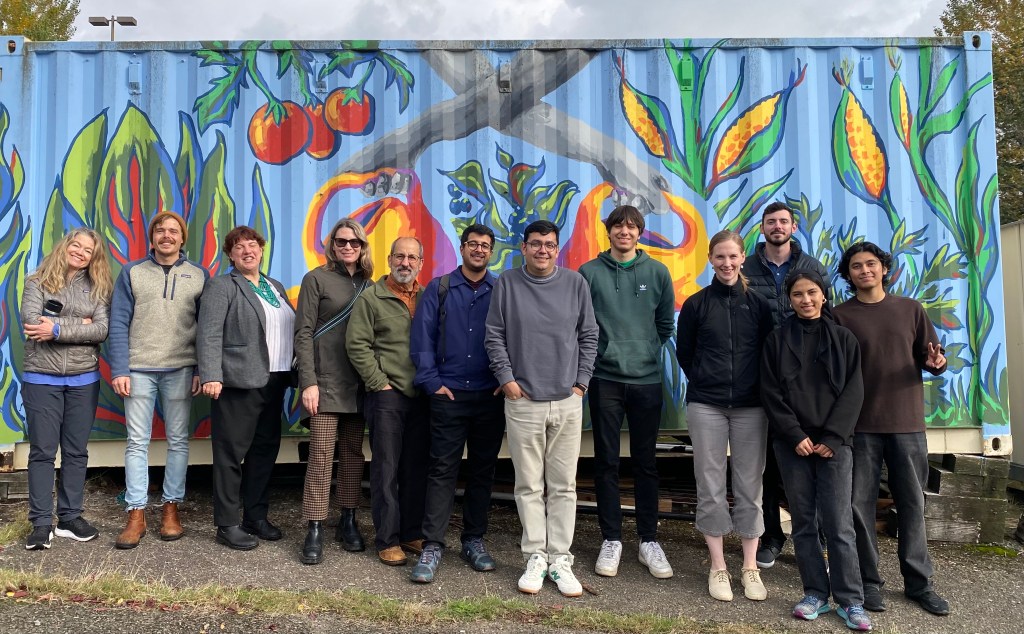
Last month the second cohort of the Research to Action Collaboratory gathered to share their progress. The Research to Action Collaboratory, or RAC, is an incubation program that provides dedicated team time, skill sharing, and seed funding. RAC teams include academics from different fields as well as community leaders who come together to tackle complex urban challenges. RAC leaders bring teams together three times a year to share project management skills and give teams the opportunity to learn from each other.
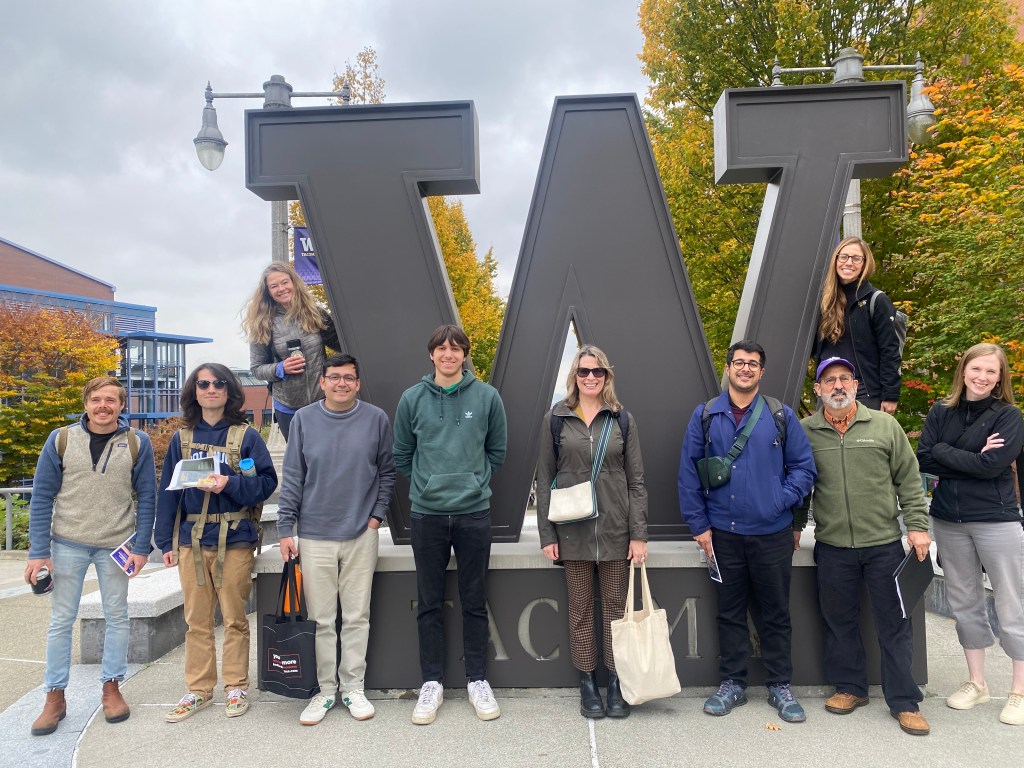
The day began with each team sharing their progress. The Microforest Team is creating a complete forest ecosystem on a small lot on the University of Washington Tacoma campus in partnership with Tacoma Tree Foundation and the City of Tacoma’s Urban Forestry Program. The project was conceived to help solve a complicated problem- only 19% of the City of Tacoma has tree canopy, which leads to more pollution and poor health outcomes, as well as a greater susceptibility to heat islands during times of extreme weather. This isn’t solely an environmental issue- the areas of the city with the fewest trees, and therefore the most detriments to health, are those most impacted by structural racism and other inequalities.The Microforest project is a move toward righting a significant injustice: the lack of government investment in parts of the city that are most populated by Black, Indigenous, and People of Color.
The future forest site was a grassy lot when the project began in spring of 2024. Now project leaders have collaborated with Cedar Circle, UWT’s indigenous student group, to create created interpretive materials that honor the Native people who still inhabit Tacoma. The group also created signage to bear witness to the internment of Japanese Americans that roiled Tacoma when, in a single day in 1942, over 900 Japanese Americans were interned.
The Microforest Team also shared that they have entered the design phase of the project. This phase involves creating an overall plan for the forest, scheduling what to plant when, and determining how the site will be maintained. Finally, the team has scheduled a planting day in May, gathering the Tacoma Tree Foundation and student volunteer groups to get plants in the ground.
The Microforest team includes:
- Rubén Casas, Assistant Professor, Culture, Arts and Communication, University of Washington, Tacoma. Faculty Lead, Urban@UW Urban Environmental Justice Initiative. UW Co-Lead
- Mark Pagano, Professor, School of Engineering and Technology, University of Washington, Tacoma. Community Engagement Lead, UW Community Engagement Initiative. UW Co-Lead
- Rachel Williams, student, School of Engineering and Technology, University of Washington Tacoma
- Ryan Wicklund, student, University of Washington Tacoma
- Lowell Wyse, Executive Director, Tacoma Tree Foundation. Community Lead
- Michael Carey, Urban Forest Program Manager, City of Tacoma
The second team in the 2024-25 cohort is Strengthening Green Stormwater Infrastructure at Paradise Plots, a large community garden and food forest in Kent, Washington. Paradise Plots is a program of World Relief Western Washington, the state’s largest refugee resettlement program. The City of Kent is the sixth most diverse city in the United States but lacks sufficient stormwater infrastructure and has a long history of flooding. A growing population and increased intense rain events have exacerbated existing challenges for people already facing structural inequalities.
The Green Stormwater team is collecting site-specific data at Paradise Plots because they have created one of the few large-scale stormwater infrastructure projects in South King County. The data will provide two important benefits: it models how other cities might implement sustainable, community-inspired stormwater management solutions. Also, the team is seeking legislative reform. Despite the project’s ability to divert over 1 million gallons of stormwater each year, the City of Kent’s utility fee system does not acknowledge the garden’s value in helping to manage water with stormwater credits. The project will provide data to the City of Kent in the hopes of changing Kent’s stormwater credit system.
Over the autumn and winter months the Green Stormwater team installed probes to monitor water flow and conductivity, conducted a literature review of similar projects, and reviewed models that use green stormwater infrastructure for hydraulic calculations. They considered studies about community GSI projects and prepared to interview stormwater utility managers/directors in cities across Washington.
The Green Stormwater team includes:
- Heidi Gough, Associate Professor, School of Environmental and Forest Sciences. UW Co-lead, supervising students Ethan Bacci, Charles (Mack) Henry, and Zach Hogue .
- Sameer Shah, Assistant Professor, School of Environmental & Forest Sciences at UW. UW Co-lead, supervising student Cyril Jonathan Clement.
- Amy Kuhl, WRWW Resiliency Program Manager
- Lucas McClish, WRWW Community Garden Coordinator. Community Lead
- Zahra Waezzada, WRWW Intern
- Austeen Pradhan, WRWW Intern
Urban@UW is working toward a future where cities are hubs of innovation, inclusivity, & sustainability.
Published on November 26, 2024
In April of 2023 the teams selected for the inaugural cohort of the Research to Action Collaboratory (RAC) were announced. These groups combine the research capabilities of University of Washington scholars with frontline leaders embedded in their communities and government officials who can codify change. The Research-to-Action Collaboratory provides the teams with seed funding, training in collaboration, organizational management tools, and equitable community engagement skills.
Just Circular Communities: A Resiliency Framework to Support a Just Transition toward Regenerative Economies in Frontline Communities
The community-initiated and led Just Circular Communities (JCC) project seeks to address environmental injustices by developing community-owned and managed infrastructures as place-based circular economy jobs designed to address systemic displacement, economic stagnation, and resilience in Frontline neighborhoods within the Duwamish Valley. The JCC concept was developed in early 2021 to address the problem of “green gentrification” with community-owned green infrastructure assets.
This project will advance this concept by co-developing a community-led resiliency framework and implementation plan that aligns with the community’s vision for a Just Transition (JT) through community initiatives grounded in shifting toward regenerative economic models. As community lead, Sustainable Seattle will connect community members to this project by identifying and facilitating learning about and developing the JCC framework. This project supports ongoing visioning and planning work documented in the Duwamish Valley Action Plan, which was completed by the City with community participation.
Project Team:
Em Piro (Community Lead), co-director, Sustainable Seattle
Catherine De Almeida (Co-PI), assistant professor, Landscape Architecture
Gundula Proksch (Co-PI), associate professor, Architecture
Nat Gregorius, masters student, Landscape Architecture
Edwin Alberto Hernandez Reto, director, Duwamish Valley Sustainability Association
Cesar Lopez, project coordinator, Duwamish Valley Sustainability Association
Christoph Strouse, masters student, Urban Design & Planning
Collaboration on Extreme Heat Events: Building a Sustainable Regional Partnership for Innovations that Promote Public Health in Response to Climate Change
The goal of this project is to establish a collaborative network between practitioners and academics to share recent innovations and identify partnership opportunities that advance public health and improve community resilience in the face of increasing extreme heat.
When the 2021 Heat Dome hit the Pacific Northwest, the region was unprepared. This unusually intense heat wave was a public health emergency and resulted in increased deaths and emergency room visits. Following the Heat Dome, public health agencies were charged with preventing future heat waves from having such devastating health impacts. This project will encourage Public Health and its partners to identify actions to reduce heat transfer pathways at the landscape/urban, building, or individual levels. By the end of this project, participants will have improved the evidence base around extreme heat interventions in urban settings, identified future research needs, and strengthened regional public health collaboration.
Project Team:
Bradley Kramer (Community Lead), program manager, Public Health – Seattle & King County
Resham Patel (Co-PI), assistant teaching professor, Department of Environmental and Occupational Health Sciences (DEOHS)
Nicole Errett (Co-PI), assistant professor, DEOHS
Ashley Moore, PhD student, DEOHS
Mary Hannah Smith, research coordinator, DEOHS
The inaugural RAC teams gather quarterly to explore, discuss and build team-specific collaborative supports and project-specific plans. Learn more about how the Research to Action Collaboratory approaches building collaborative capacity, and how you can get involved.
Creating multi-sector teams to build cities where everyone thrives
Published on November 26, 2024
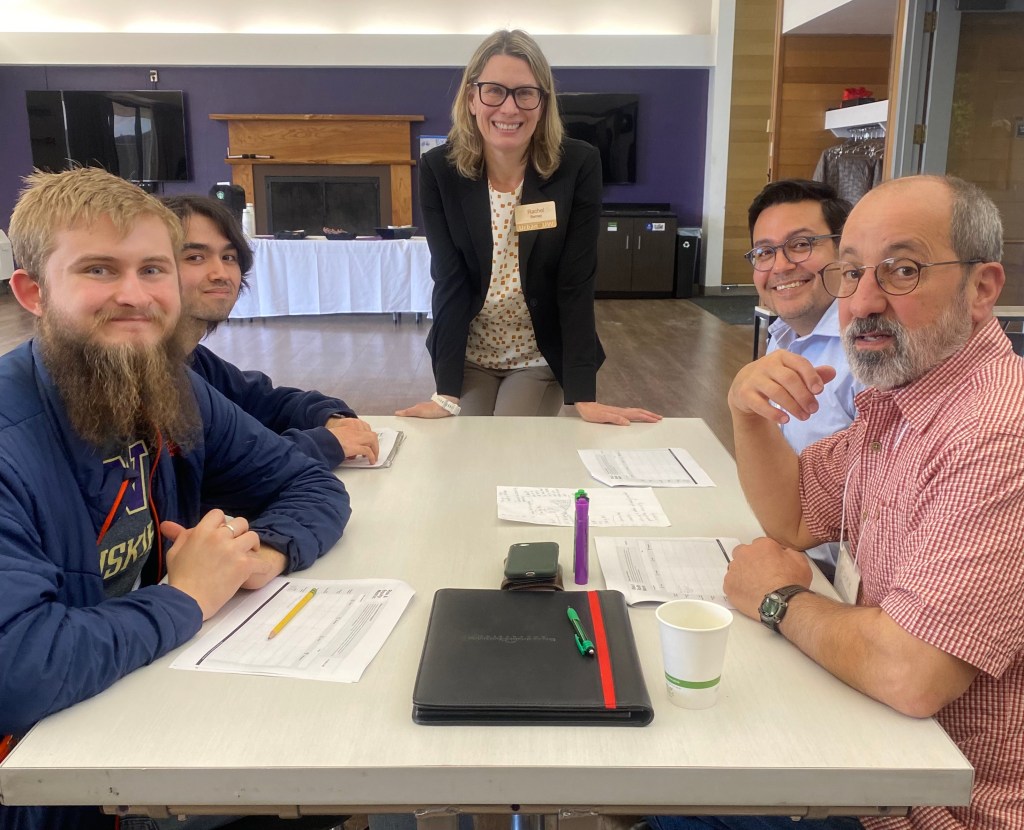
In April of 2024 two teams were selected for participation in the second cohort of the Research to Action Collaboratory. For 18 months Urban@UW will work with these teams to provide seed funds, dedicated time to building team cohesion and collaboration skills, and opportunities for peer support, shared resources, and learning. These two project teams also have the chance to learn from the inaugural RAC cohort, whose projects are ongoing.
Strengthening Green Stormwater Infrastructure Through Community Initiatives
This project aims to collect site-specific data at one of the few large-scale green stormwater infrastructure projects in South King County. It is significant for two reasons: it models how other cities might implement sustainable, community-inspired stormwater management solutions and is part of a community garden project serving a refugee-immigrant population in the United States’ sixth most culturally diverse city. World Relief Western Washington (WRWW), the state’s largest refugee resettlement and service agency, manages the garden project.
The City of Kent, Washington, has a long history of flooding. A growing population and increased intense rain events have exacerbated existing challenges. The green stormwater infrastructure at the acre-plus Paradise Gardens, the aforementioned community food project, utilizes five rain gardens, a 2,300 sqft bioswale, and 20,000 gallons of rainwater catchment to divert water away from flood-prone areas. However, despite the project’s ability to divert over 1 million gallons of stormwater each year, the City of Kent’s utility fee system does not acknowledge the garden’s value in helping to manage city stormwater with stormwater credits. This project will engage multiple faculty and students collaborating with the World Relief Western Washington Resiliency Program to provide data to the City of Kent for Paradise Gardens. This collaboration will not only empower the project to receive stormwater credits to offset the cost of green infrastructure, it will also indicate how other cities could implement innovative greenwater solutions.
Project Team:
- Heidi Gough, Associate Professor, School of Environmental and Forest Sciences. UW Co-lead
- Sameer Shah, Assistant Professor, School of Environmental & Forest Sciences at UW. UW Co-lead
- Amy Kuhl, WRWW Resiliency Program Manager
- Lucas McClish, WRWW Community Garden Coordinator. Community Lead
- WRWW Youth Project Intern
Creating an Urban Microforest at UW Tacoma
This project aims to create an urban microforest on the University of Washington’s Tacoma (UWT) campus. The City of Tacoma, WA, has only a 19% tree canopy, leading to poor health outcomes due to dirty air, increased temperature, and a greater susceptibility to heat islands during extreme heat events. Further, the areas of the city with the least tree canopy (as low as 3%) are also the parts most impacted by structural racism and other inequalities. The microforest will improve air quality, combat the heat-island effect, and re-establish diverse ecosystems within the urban landscape.
This microforest project applies existing knowledge to a present issue in downtown Tacoma; it also presents students, researchers, local government, and community members with opportunities to research, learn, and apply new knowledge that can serve us further in the coming years. In collaboration with students and, particularly, members of Cedar Circle, UWT’s indigenous student group, the project will include creating interpretative materials and programming that leverage the site as a public memory and current indigenous presence. As a collaborative, community-engaged project, the siting of micro-forest on the UWT campus leverages partnerships with Tacoma’s Urban Forestry Program, the Tacoma Tree Foundation, and the University of Washington’s Tacoma campus.
Project Team:
- Rubén Casas, Assistant Professor, Culture, Arts and Communication, University of Washington, Tacoma. Faculty Lead, Urban@UW Urban Environmental Justice Initiative. UW Co-Lead
- Mark Pagano, Professor, School of Engineering and Technology, University of Washington, Tacoma. Community Engagement Lead, UW Community Engagement Initiative. UW Co-Lead
- Rachel Williams, student, School of Engineering and Technology, University of Washington Tacoma
- Ryan Wicklund, student, University of Washington Tacoma
- Lowell Wyse, Executive Director, Tacoma Tree Foundation. Community Lead
- Michael Carey, Urban Forest Program Manager, City of Tacoma
The second generation of RAC teams will gather quarterly to explore, discuss, and build team-specific collaborative supports and project-specific plans. Learn more about how the Research to Action Collaboratory approaches building collaborative capacity, and how you can support it.
Blog Posts written while Interim Minister at the UU Church of Akron
June 2022
Dear Ones,
It seems that we have come through the worst of the pandemic storm. As we mourn the loss of 604,000 fellow citizens in the US and millions more around the world, we also must take a moment to celebrate that we made it. Feel your feet on the ground and the beating of your heart- you made it. In a year and a half of fear and sadness it is good to recall all the losses we feared that did not come to pass. We hold grief in one hand and joy in the other. For those that were lost, we weep. For those that remain, we give thanks.
Psychologists tell us it will take a while-months or even years- for us to move out of the hyper-vigilance of pandemic mode. Our bodies are pumping too much cortisol, our brains are on high alert for predators, and we see danger where no danger lies. In this mindset we may assume the worst of others, even the people we love. If your spouse leaves a wet towel on the bed and you take it not as carelessness but as a personal attack- that’s post-pandemic brain. If the mail carrier doesn’t smile back at you and for a fleeting second you think they hate you- that’s post-pandemic brain. Let’s be extra generous with each other while we adjust to our new normal.
We can start moving out of pandemic mode by signaling to our bodies that we are safe. I am spending twenty minutes a day meditating, beginning my practice by breathing in for four seconds, holding my breath for seven seconds, and exhaling for eight seconds. I also am benefitting from yoga, connecting my breath to my movement, so my body can stay in the present and not move into over-vigilance. Perhaps this is a good time for you to check out Tai Chi or Qigong videos online or at a martial arts center. Find ways to communicate to your body that you are safe.
As we move through the unknown I find solace in the words of the mystical theologian and poet Rilke:
Have patience with everything unresolved in your heart
and try to love the questions themselves
as if they were locked rooms
or books written in a very foreign language.
Don’t search for the answers,
which could not be given to you now,
because you would not be able to live them.
The point is, to live everything.
Live the questions now.
Perhaps then, someday far in the future,
you will gradually, without even noticing it,
live your way into the answer.
May we be gentle with ourselves and each other as we live the questions and gradually live our way into the answers.
Kate
January 2022
Dear Ones,
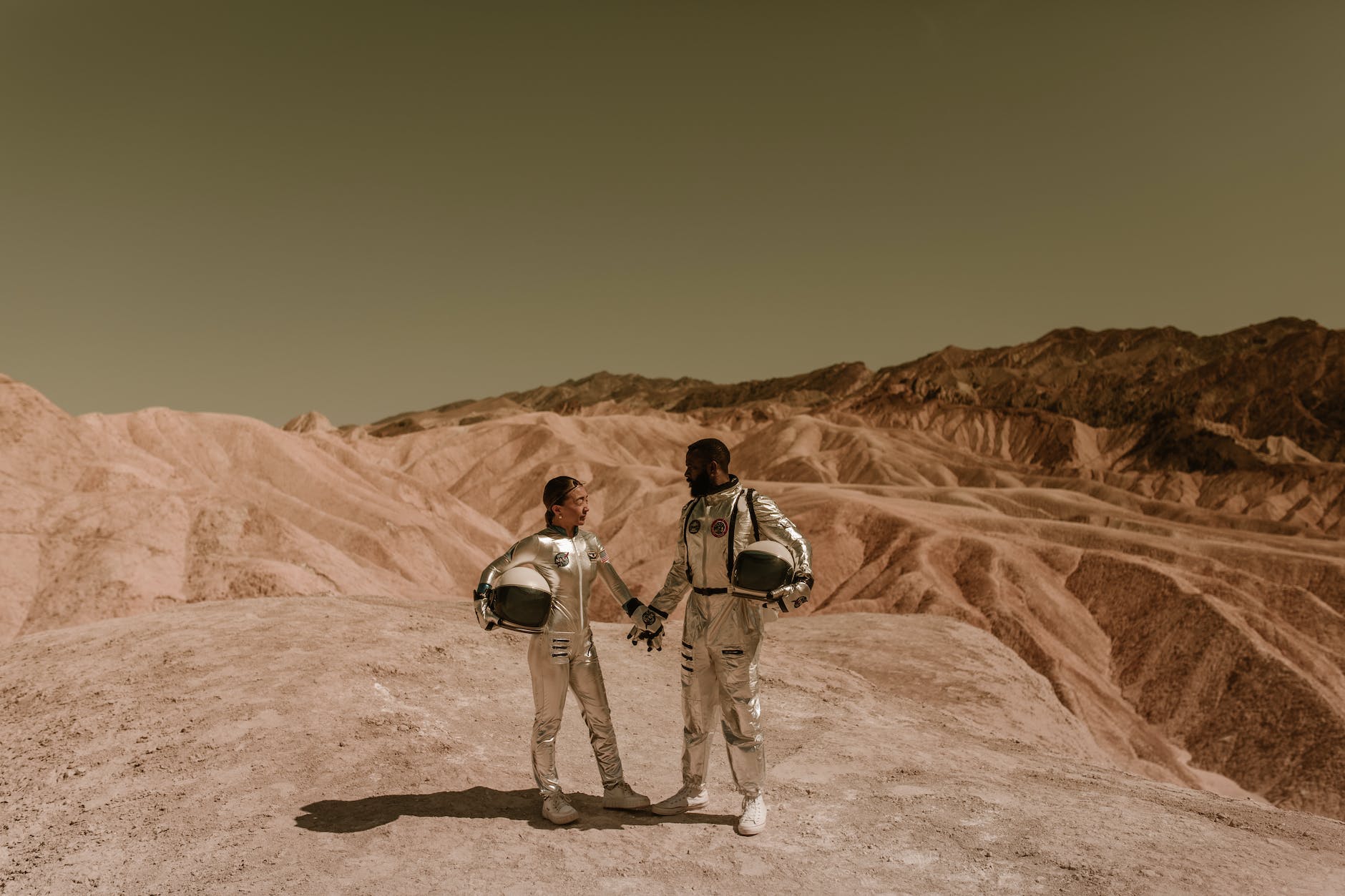
What would we need to live on Mars? A lot of stored oxygen, some kind of weighted boots to keep from floating into space, spacesuits to protect us from the extreme heat and dust… What would we eat if we lived on the red planet? What would you we do to relax? I’m not suggesting that we all move, this is a metaphor. What would we need to live in extreme conditions that were unlike anything we have experienced before?
I ask because this is a strange and difficult time. A time unlike anything we have lived through before. We are isolated for long periods. Parents are raising children with little external support. Health care systems are overwhelmed. And we are afraid of getting a virus that, if we survive it, has unknown long-term effects on the body. We are deeply weary from the uncertainty and emotional difficulty of pandemic life. So what do we need for this time, when we may as well be living on Mars? Remaining calm and healthy requires different skills and tools than our business-as-usual lives did, back when we lived on Earth. That doesn’t mean that we are failing or doing something wrong. No matter how good we were at living on Earth, life on Mars is really odd and hard. And sadly the suicide rates here on Mars are very high. Despair is the (other) pandemic. What can we do to help us survive? In these final months before re- turning to Earth what do we need to keep going?
Even if you didn’t need it on Earth, therapy might help with life on Mars. A good place to find a therapist is NAMI, the National Association for Mental Illness. It can be hard to find a therapist if you have marginalized identity, particularly if you are BIPOC or Trans. Fortunately the internet can help- Queerhealers.com has mental health and alternative health practitioners who are Black, Indigenous, and People of Color, Transgender, and GLBTQI. TherapyforBlackGirls.com can connect you with Black therapists. InclusiveTherapists.com manages a directory of professionals from historically marginalized communities- queer, poly, BIPOC. Maybe you haven’t done therapy before, or maybe you tried it and didn’t like it. That’s okay- this is a new and unfamiliar planet. Therapy might help you breathe a little easier now. If one-on-one therapy seems too in- tense, there are plenty of group therapy/support group options. You can find those on the sites above.
Another skill you’ll need on Mars is to find something new and enjoyable that settles your mind. On Earth you may have been too busy to have a lot of hobbies. Here on Mars taking up knitting, building birdhouses, snowshoeing, or Indian cooking will give your brain time to process all the chaos of the current reality while your hands are busy. This will lead to feeling relaxed and sleeping better. Plus, you’ll have new socks/a birdhouse/muscular calves/ good food for dinner. I am knitting tiny stuffed succulents. Why? To relax. What will I do with a pile of tiny succulents? No idea. But it’s a relaxing and satisfying way to spend time.
Finally, here on Mars we have to be willing to ask for help. I know we are rugged Northern-westerners and therefore not up to getting all emotionally gooey with our neighbors. That’s okay, just think of a handful of people you can reach out to if you want to talk or need support. Last weekend a friend who lives far away asked if I could have a Zoom chat with her daughter so she could have a half-hour to do other things. Fun for me and she got a break! Think of ways you can get help even while socially distanced. If you are lonely and need a friendly voice reach out- loneliness is at epic levels so odds are they will be glad to hear from you.
The next months may be difficult but we will get through them together. If it gets to be too much and you are thinking about hurting yourself, please the suicide hotline (800-273-8255). Things are going to improve- I promise- and I don’t want your to miss the fun we are going to have post-pandemic. We need you. Reach out. You are worth it.
I love you fellow Martians,
Kate
December 2021
Dear Ones,
When I was a child every December we went downtown to see the lighting of the huge Christmas tree on Courthouse Square in Dayton. We sang carols along with my dad’s Tuba Christmas group and drank hot chocolate and visited the Talking Christmas Tree. The Talking Christmas Tree wasn’t the biggest tree on the square, or the most fancifully decorated. It was really a fairly unremarkable tree except for its central feature- it could talk. Every year my brother and I would say hi to the tree and it would ask what we wanted for Christmas and tell us to be good for Santa.
The Talking Christmas Tree was a special and rare treat but one year I, a talkative child by any account, was struck speechless when we approached the tree and it called us by our names. “Well hello, it’s Katie and Tommy Landis, along with their parents Janet and Ray!” the tree remarked. The Talking Christmas Tree had never known our names before! “Are you excited to sing at church with the children’s choir this Sunday?” the tree asked us. I couldn’t respond, my mouth was hanging open with surprise. I couldn’t help but note that while there were other children everywhere, the tree was only calling us by name. While I had quietly suspected that I was quite a special little girl this confirmed it. I was speechless all evening, reveling in being recognized by such an esteemed figure as the Talking Christmas Tree.
Years later my parents confided that the Talking Christmas Tree was actually voiced by a man from our church who had known us our whole lives. He was an actor who had gigs all over town- he was on local TV commercials for car dealerships and in the plays that we saw on field trips. I was fortunate to grow up surrounded by kind adults from my congregation who made my life more interesting and delightful. This was one of many times everyday things were more fun because of the grown-ups in my community.
Some of us celebrate Christmas, some Hanukkah, some Solstice, some another holy day or no winter holidays. We are also in a strange time of pandemic and varying levels of quarantine and social isolation. So this will probably be a different holiday season than those we have experienced in years past. However you celebrate I hope you can find a way to make a little magic for someone in your life. Maybe that means leaving cookies on a friend’s porch, or sending a hand-made holiday card to a child in our church family. Maybe you will candy-cane-bomb a friend’s front yard by covering it with candy canes planted in the snow. It doesn’t have to be elaborate, or expensive. Find some way to make a person feel special, seen and appreciated, this holiday.
As I mentioned last year at this time, the winter holidays are difficult during normal times, and more so during a global pandemic. If you feel sad, or stressed out, or like hibernating, go easy on yourself. Give yourself a lot of grace this season. Try to reach out to friends who make you feel good about yourself and set boundaries with anyone who makes you feel bad. Ask for the help you need knowing that you deserve it. If it’s hard to remember that you are a holy and sacred being, make a post-it note reminding yourself that I said you are awesome and I meansit.
We will get through this season of darkness and cold by being kind to ourselves and to each other. Bring some delight to this world, if you can. You are a wonderful blessing.
Kate
March 2022
Dear Ones,
It is March and the birdsong has become plentiful outside my window. The tulips, undeterred by the heavy snow in February, are ankle-high, and the apple trees have tiny, brown buds. Once again we are redeemed by the spring. Once again the cold loses it’s strength as the sun lingers longer each day. Nature is resurrected.
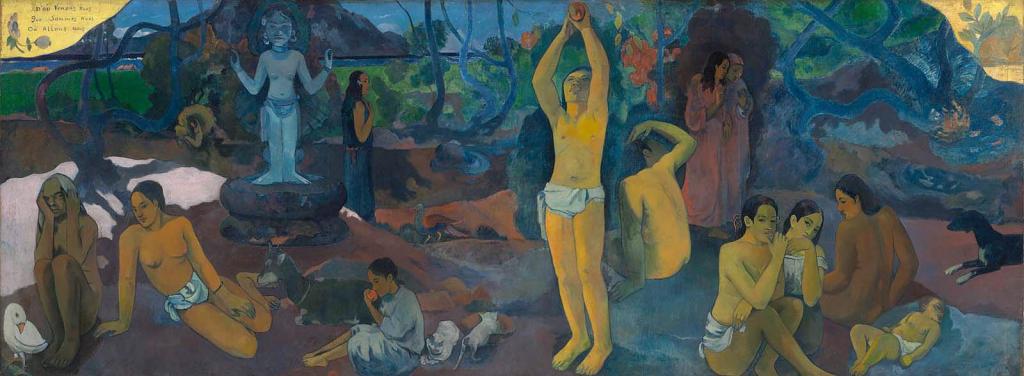
Speaking of resurrection: in the late 1890’s the French Post-Impressionist painter Paul Gauguin attempted to end his life. A few years before he had abandoned the competitive French art scene for what he hoped would be a simple life in Tahiti. He had what we now call a colonialist, or just plain racist, view of life in Tahiti- that simple-minded villagers, living in huts, would teach him the meaning of life. He hoped to escape what he considered the ills of civilization. Of course, Tahiti was full of people as sophisticated as those back in France and they were unimpressed with the French painter. They had no more answers regarding the meaning of life and death then Europeans (or if they did, they weren’t telling him).
Gauguin became depressed, which only worsened after his favorite daughter unexpectedly died. He was in tremendous debt and felt his work was unappreciated. He finished a painting that he considered his masterpiece, and the culmination of his life’s exploration of philosophy. As the thick oil paints dried Gauguin swallowed a tremendous amount of arsenic in an attempt to end his life. Fortunately the dose wasn’t toxic. Grateful for his reprieve, Gauguin added a title, sans punctuation, to his painting-
D’où Venons Nous?
Que Sommes Nous?
Où Allons Nous?
Or in English:
Where do we come from?
What are we?
Where are we going?
These simple words encompass the great queries of human life- where were we before we were born? What is the purpose of a human? Why do we live? Does any part of our being transcend death? Gauguin added this title to his painting, perhaps, in a spirit of surrender to the mysteries that we can’t solve in our lives. Perhaps he finally realized that these are the questions we all wrestle with, and that in his unknowing he was not alone.
Gauguin pondered life’s big questions alone and became depressed. Alone, his unknowing was painful. But together in community we find that not knowing is less scary and more fascinating. Together we can plumb life’s depths and share our own unique wisdom. And in all our questions we know we are not alone.
With love,
Kate
July 2021
Dear Ones,
It is mid-summer- how is your spirit? Let’s take a minute to check in with our souls.
Kate’s Official Soul Audit, Summer 2019
What would you like to learn this summer? What would you like to experience? What would you like to release?
Do you feel connected to the people you love? Do you feel appreciated? Treasured? Loved?
Do the people you love know that you love them? Who could use a hug, a phone call, a thank-you note?
Are the people you love kind to you? Do you feel safe (emotionally, physically) when you are with them?
Do you have the capacity (time, space, inclination) to be creative?
Toward what are you giving your hours and energy? Are you content with the results of those expenditures?
How does your physical body feel? What hurts and what feels powerful? What parts of your body could use more care? Is your body longing for a massage, a glass of water, a handful of blueberries, a hug? Are you getting enough rest? Too much rest?
Are you using your computer, phone, and social media accounts in ways that increase your well-being?
How is your relationship with the natural world feeling?
Do you feel connected to something bigger than yourself? A social movement, a community, God, Mystery? How can you invest your time in those connections?
If your life ended this summer how would you hope people remembered you? What would be your legacy?
In our summer rush to enjoy every second of sunshine, remember to look inside. In our busy world we sometimes forget the power we have to prioritize how we engage with our lives and with each other. Spend some time with your audit answers. Maybe some life reorganization is in store.
Love,
Kate
